
TL;DR:
- Decals personalize vehicles without costly permanent modifications and are reversible.
- Different vinyl types and installation techniques ensure durability and a professional look.
- Overlays protect factory paint and can reflect ownership, heritage, and community loyalty.
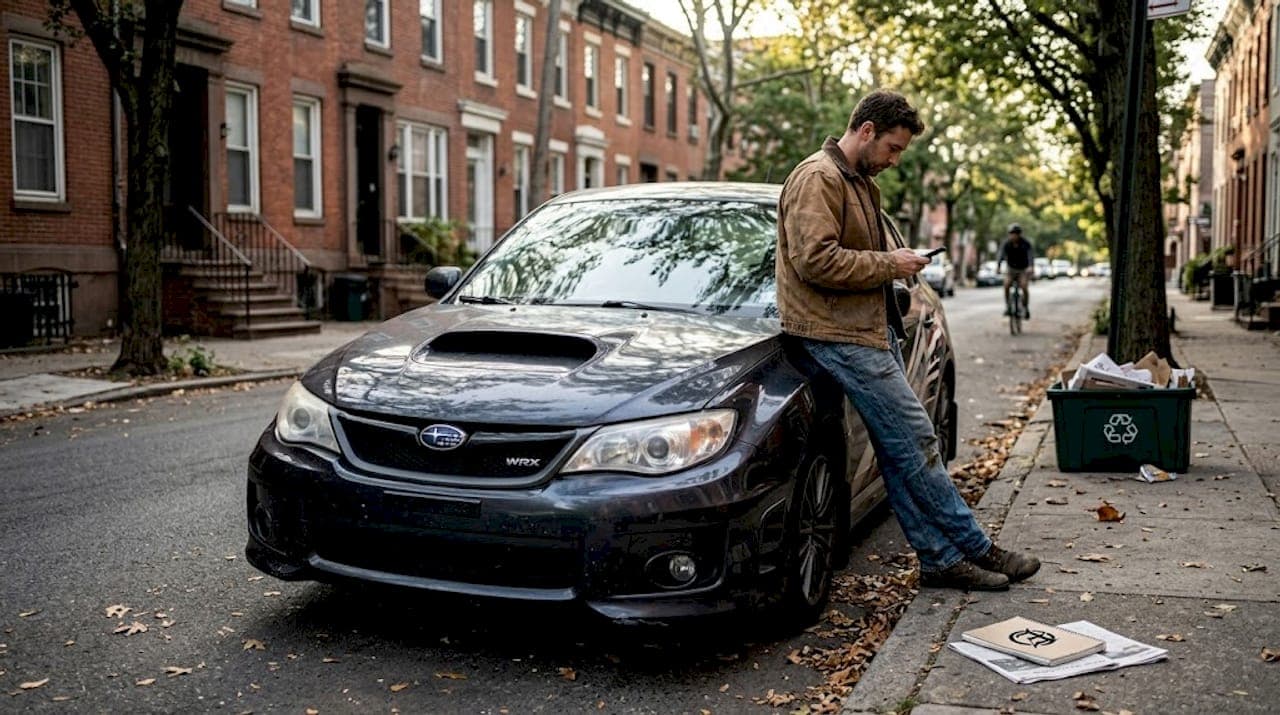
A single set of vinyl decals can make your Subaru or Ford stand out at a car meet more than a $3,000 paint job. That's not a sales pitch — it's the reality that thousands of enthusiasts have discovered. Most people assume real individuality requires permanent, expensive modifications. But decals enable personalization by adding unique graphics, stripes, and emblem overlays that enhance style without draining your savings. This guide covers materials, installation, expert advice, and how Subaru and Ford owners are using decals to express heritage, personality, and community loyalty in ways that paint simply cannot match.
Table of Contents
- Why decals matter: From individuality to community
- Types of car decals and overlays for Subaru and Ford enthusiasts
- Choosing the right materials: Cast vs. calendared vinyl explained
- How to install decals: Step-by-step for durable, flawless results
- The truth most enthusiasts miss: It's not just about looks
- Ready to revamp your Subaru or Ford? Get started with emblem overlays
- Frequently asked questions
Key Takeaways
| Point | Details |
|---|---|
| Decals enable personalization | Car decals and overlays are a powerful, affordable way for Subaru and Ford owners to express their individuality and community ties. |
| Material choice matters | Cast vinyl lasts longer and bends over curves, while calendared vinyl fits flat areas but does not last as long. |
| Installation affects results | Proper cleaning, application, and curing ensure decals protect paint and look flawless for years. |
| Style and value benefits | Quality decals don’t just enhance appearance—they can protect original paint, help resale value, and signify community membership. |
Why decals matter: From individuality to community
Decals are not just stickers. They carry meaning. For Subaru owners, a well-placed rally-inspired graphic nods to decades of WRC dominance. For Ford Mustang fans, a classic side stripe is almost a rite of passage. These choices signal who you are before you even step out of the car.
What makes decals genuinely powerful is that they are reversible. You can swap a state flag emblem overlay on your Subaru Outback for a different design six months later without touching the factory paint. That flexibility is something no $3,000 custom paint job can offer. Understanding the connection between personalization and identity helps explain why enthusiasts keep coming back to decals as their first upgrade, not their last.
The motorsport connection is real and deep. Subaru's rally heritage, built on iconic blue-and-gold liveries, has inspired countless WRX and Impreza owners to mirror that aesthetic on street cars. Ford's Mustang, with its Boss 302 and Shelby roots, carries a striping tradition that dates back to the 1960s. Decals let everyday owners tap into that history without misrepresenting a race car they don't own.
Community is another dimension most people underestimate. Club decals, model-specific graphics, and shared emblem styles create an instant visual language at car meets and online forums. You spot a Subie with a particular overlay and you already know something about that owner. That's the real impact of overlays that goes way beyond surface aesthetics.
Here's a quick look at the most common reasons enthusiasts choose decals:
- Standing out at car meets without a full respray
- Expressing brand loyalty through heritage-inspired graphics
- Masking minor surface blemishes under stylish designs
- Joining a club or community through shared visual identifiers
- Protecting factory paint while adding a personal touch
"Decals enable distinction in crowds and echo motorsport heritage, making them one of the most culturally rich forms of car personalization available."
Types of car decals and overlays for Subaru and Ford enthusiasts
Not all decals are created equal, and choosing the wrong type for your application is one of the most common mistakes enthusiasts make. There are three primary categories worth knowing: printed graphics, cut vinyl, and emblem overlays.
Printed graphics are full-color designs printed onto vinyl and then applied as a sheet. They work well for complex imagery, photographic patterns, or designs with gradients. Cut vinyl is a single-color material cut into shapes using a plotter. It's ideal for clean, bold graphics like racing stripes on a Ford Mustang. Emblem overlays are precision-cut pieces that sit directly over your factory badge, transforming its appearance without removing it.
Material matters as much as style. Here's how the two main vinyl types compare:
| Feature | Cast vinyl | Calendared vinyl |
|---|---|---|
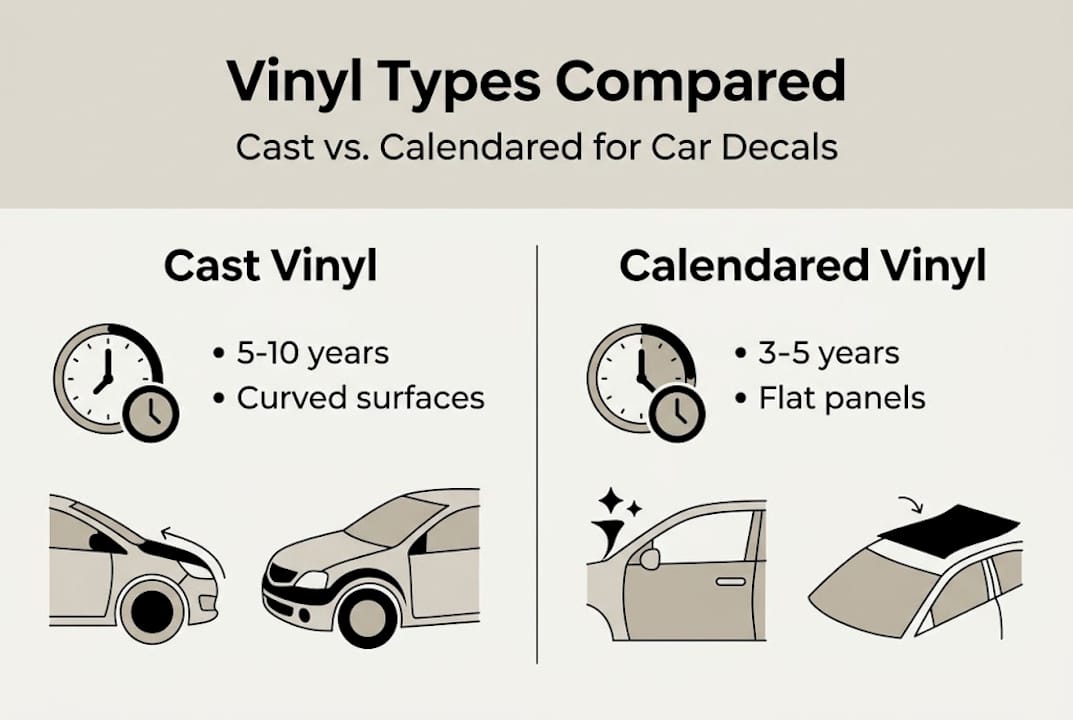
| Durability | 5 to 10 years | 3 to 5 years |
| Conformability | Excellent (curves, contours) | Limited (flat surfaces) |
| Shrinkage over time | Minimal | Moderate |
| Best use | Emblems, curved body panels | Flat door panels, hoods |
| Cost | Higher | Lower |
Cast vinyl is preferred over calendared for car decals due to superior conformability, while calendared suits flat panels but shrinks more over time. Understanding vehicle surface decal compatibility before you buy saves you from costly mistakes.
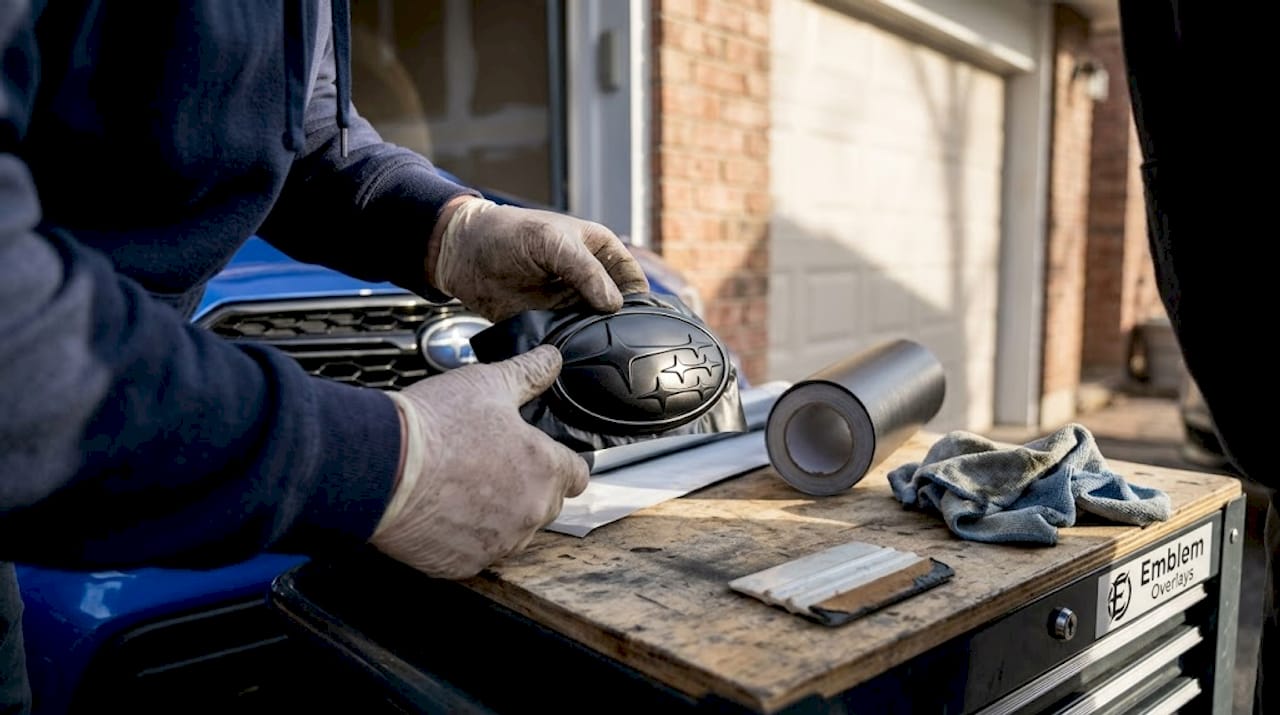
For style impact, the choices should match your model's personality. Aggressive wide-body stripes suit a Ford Mustang GT or F-150. Subtle, clean overlays on a Subaru Crosstrek or Forester add a refined touch without overdoing it. Custom emblem overlays offer one of the cleanest ways to modernize a factory look.
Here's a quick guide for choosing the right type:
- Emblem overlays: Best for curved badges and tight-fitting designs
- Cut vinyl stripes: Best for bold, single-color statements on flat body panels
- Printed graphics: Best for complex, multi-color designs or full wraps
- Combination approaches: Use overlays on badges plus stripes on body panels for a layered look
Exploring the top benefits of overlays can help you narrow down which type fits your specific goals.
Choosing the right materials: Cast vs. calendared vinyl explained
You've picked your design. Now the material choice determines whether it looks great for two years or ten. This is where a lot of enthusiasts cut corners and regret it later.
Cast vinyl is made by spreading a liquid vinyl mixture onto a casting sheet, which allows the material to retain its shape permanently. This is why it hugs curves so well. Calendared vinyl, by contrast, is made by squeezing vinyl through rollers under pressure. It's thicker, stiffer, and has memory — meaning it wants to return to its flat original shape, which causes lifting and shrinkage over time.
For emblem overlays on Subaru or Ford badges, cast vinyl is non-negotiable. Factory emblems are rarely flat. The curves on a Subaru pleiades badge or a Ford oval require material that conforms without fighting the surface.
Here's a material comparison that matters for your specific situation:
| Material | Longevity | Surface compatibility | Maintenance |
|---|---|---|---|
| Cast vinyl (3M 1080) | 5 to 10 years | Curved and flat | Low; resists UV and moisture |
| Cast vinyl (Avery Dennison Supreme) | 5 to 10 years | Curved and flat | Low; excellent color retention |
| Calendared vinyl (Oracal 970) | 3 to 5 years | Flat panels only | Moderate; inspect edges seasonally |
Cast vinyl lasts 5 to 10 years; major brands include 3M 1080, Avery Dennison Supreme, and Oracal 970. These brands are the industry standard for good reason — they carry legitimate warranties and have proven performance data behind them.
Pro Tip: Match your vinyl grade to how you actually use your vehicle. If you drive a Subaru WRX through winter road salt or a Ford Ranger off-road, invest in cast vinyl with UV protection. Calendared vinyl on a daily driver in a harsh climate will show edge lifting within 18 months. For show-focused builds, explore emblem personalization options using premium cast materials.
How to install decals: Step-by-step for durable, flawless results
Even the best vinyl fails if the installation is rushed. Temperature, surface prep, and technique all affect how long your decal stays looking sharp. Here's a proven process.
- Clean the surface with isopropyl alcohol (IPA) at 70% or higher. Wipe down the entire area, not just where the decal goes. Residual wax or grease is the number one cause of premature lifting.
- Let the surface dry fully for at least five minutes before touching it again.
- Position and tape the hinge. Lay your decal in position and tape one edge to act as a hinge. This lets you fold the decal back while keeping it aligned.
- Peel the backing gradually. Fold the decal back along the hinge line and peel the backing away in sections, not all at once.
- Squeegee from center outward. Use firm, overlapping strokes to push air bubbles toward the edges. Never start from an edge or you'll trap air in the middle.
- Remove the transfer tape slowly at a low angle to avoid lifting the decal.
- Apply heat for emblem overlays. Use a heat gun or hair dryer on a low setting to soften the vinyl over curved surfaces. Work in small sections.
The hinge method is the installation standard: clean with IPA, dry, hinge with tape, squeegee from center out, cure, and use heat for emblem overlays. Follow the vinyl overlay installation guide for more detail on technique variations.
Pro Tip: Install decals when the surface temperature is between 60°F and 80°F. Too cold and the adhesive won't bond properly. Too hot and the vinyl becomes difficult to position. For curved emblems specifically, follow the practical overlay installation approach and treat decal application as car emblem art — patience pays off.
Allow 48 to 72 hours of cure time before washing the vehicle or exposing it to heavy rain. Air-release technology, built into premium cast vinyls, helps eliminate micro-bubbles that form during installation.
The truth most enthusiasts miss: It's not just about looks
Here's something the car community rarely talks about openly: decals and overlays can actually be a smarter financial decision than leaving your factory paint exposed. Most people treat customization as pure spending. The reality is more nuanced.
Decals protect paint from scratches and environmental hazards, not just boost style. A vinyl overlay sitting over your Subaru's hood emblem is shielding that paint from rock chips and UV fade every single day. When you remove it cleanly years later, the paint underneath is often in better shape than the surrounding areas. That's real, measurable value.
There's also the community status angle. At any serious Subaru or Ford meet, people notice the quality of your choices, not just the quantity. A clean, well-executed emblem overlay from a respected source signals that you understand the details. It says "insider" in a way that a generic stick-on badge never could.
The contrarian truth is this: less is often more. One perfectly chosen overlay that fits your model's character will turn more heads than ten mismatched decals competing for attention. We've seen it at event after event. The builds that photograph best and earn the most genuine compliments are the restrained ones.
Decals are one of the rare upgrades that personalize and protect your ride at the same time. That dual function is what makes them a genuinely smart choice, not just a fun one.
Ready to revamp your Subaru or Ford? Get started with emblem overlays
You now understand the materials, the techniques, and the real-world value behind great decal work. The next step is easy.
We make custom emblem overlays designed specifically to fit the factory badges on Subaru and Ford vehicles. Every overlay is precision-cut from premium cast vinyl, so it conforms cleanly to curved emblems without lifting or bubbling. We carry hundreds of designs including every state flag, making it simple to add a personal, regional, or heritage touch to your ride. Explore our collection of handmade emblem overlays and find the design that fits your vehicle's personality. Installation takes minutes and the results last years.
Frequently asked questions
How long do car decals and emblem overlays last?
Cast vinyl decals usually last 5 to 10 years outdoors, while calendared vinyl typically lasts 3 to 5 years depending on climate and UV exposure.
Can decals damage the paint on my Subaru or Ford?
When installed and removed correctly, decals can actually protect your paint from scratches and environmental damage rather than causing harm.
What's the best way to install vinyl decals or overlays?
Clean the surface with isopropyl alcohol, use the hinge installation method, squeegee from center outward, and allow 48 to 72 hours of cure time for a bubble-free, professional finish.
Are custom overlays only for appearance, or do they serve other purposes?
Besides upgrading your vehicle's look, overlays also shield factory emblems from rock chips and UV damage and can help maintain better resale value over time.
How do I choose the right type of decal for my car's surface?
Use cast vinyl for curved badges and emblems, and calendared vinyl for flat panels like hood scoops or door sections where conformability is less critical.