
TL;DR:
- OEM emblems are factory-designed, precisely fitting, durable, and match vehicle paint perfectly.
- Overlays sit on top of OEM badges, offering customizable, reversible styles without damaging the vehicle.
- Proper surface cleaning and understanding mounting methods are essential for lasting, damage-free emblem customization.
Most car enthusiasts spend hours planning paint jobs, wheel upgrades, and suspension mods without giving their emblems a second thought. That's a missed opportunity. The badge on your Subaru or Ford is not just a manufacturer's signature — it's a customization canvas. A lot of drivers assume all vehicle badges are interchangeable, but OEM emblems are a completely different category, and understanding that difference changes how you approach personalization. Whether you're considering a blacked-out overlay or a state flag design, this guide will clear up the confusion and help you make smarter choices for your build.
Table of Contents
- What is an OEM emblem?
- OEM vs. aftermarket and overlay emblems: What's the difference?
- How OEM emblems are attached and removed
- Popular OEM emblem overlay options for Subaru and Ford
- Maintaining and caring for your emblems
- What most guides miss about OEM badges and overlays
- Next steps: Transform your Subaru or Ford with custom overlays
- Frequently asked questions
Key Takeaways
| Point | Details |
|---|---|
| OEM means original quality | OEM emblems are factory-designed for perfect fit, finish, and authenticity. |
| Overlays offer safe customization | You can personalize your car’s look with overlays without damaging the original emblem or paint. |
| Attachment method matters | Knowing how emblems attach and detach helps you avoid damage during modifications. |
| Trendy overlays available | Subaru and Ford owners can pick from many stylish overlay options for unique looks. |
| Maintenance keeps style fresh | Regular care ensures both OEM and overlay emblems stay sharp and last longer. |
What is an OEM emblem?
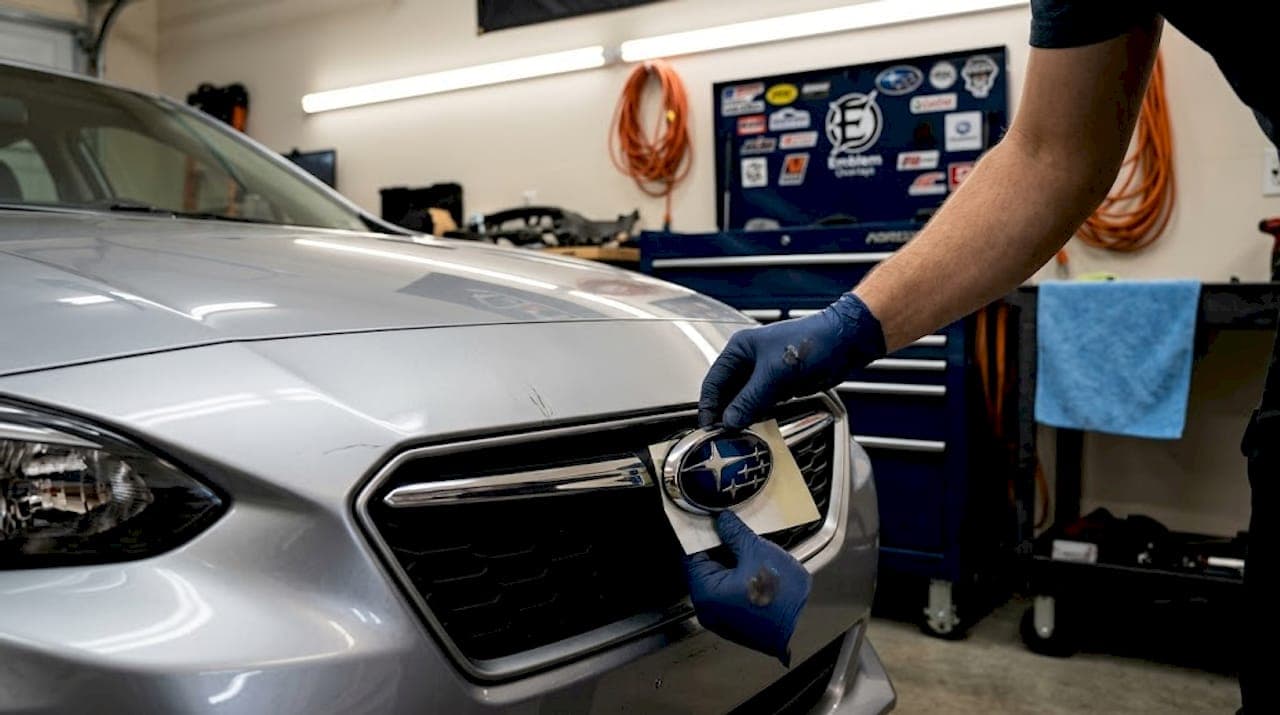
OEM stands for Original Equipment Manufacturer. In simple terms, an OEM emblem is the badge that your vehicle left the factory wearing — designed, spec'd, and installed by the automaker or their authorized supplier. For Subaru owners, that's the iconic six-star Pleiades cluster. For Ford drivers, it's the familiar blue oval. These aren't random aesthetic choices. They're precision-engineered brand marks.
What separates an OEM emblem from a generic badge you'd find at a discount auto parts store? A few important things:
- Exact fit: OEM badges are designed to the millimeter for your specific model and year.
- Material quality: Automakers use chrome-plated ABS plastic, stainless steel, or high-grade resins that resist UV, temperature swings, and car washes.
- Adhesive spec: The bonding agents used on OEM emblems are formulated to last the lifetime of the vehicle without lifting or bubbling.
- Color consistency: OEM paint codes and finishes match the rest of your vehicle's trim perfectly.
Collectors and serious enthusiasts strongly prefer OEM emblems when replacing damaged or faded badges because a knockoff simply won't sit flush or age the same way. You can often tell the difference from ten feet away.
Here's what makes overlays such an interesting option in this context: they're designed to work with your OEM badge, not replace it. Custom emblem overlays sit directly on top of the factory badge, giving you a completely new look while preserving everything that makes the OEM emblem worth keeping.
The original badge is your foundation. A quality overlay turns it into a statement.
Think of the OEM emblem like the factory primer coat under a custom paint job. You don't remove what works — you build on it.
OEM vs. aftermarket and overlay emblems: What's the difference?
Once you understand what an OEM emblem is, the next logical question is how it stacks up against the other options on the market. There are three main categories every Subaru and Ford owner should know.
| Type | Origin | Quality | Fit | Reversible? |
|---|---|---|---|---|
| OEM | Factory/automaker | Highest | Perfect | No |
| Aftermarket | Third-party brand | Varies | Close, not exact | No |
| Overlay | Applied over OEM | Depends on brand | Conforms to OEM | Yes |
OEM emblems are the gold standard for fit and finish. If your original badge gets damaged, replacing it with a genuine OEM part is always the cleanest solution.
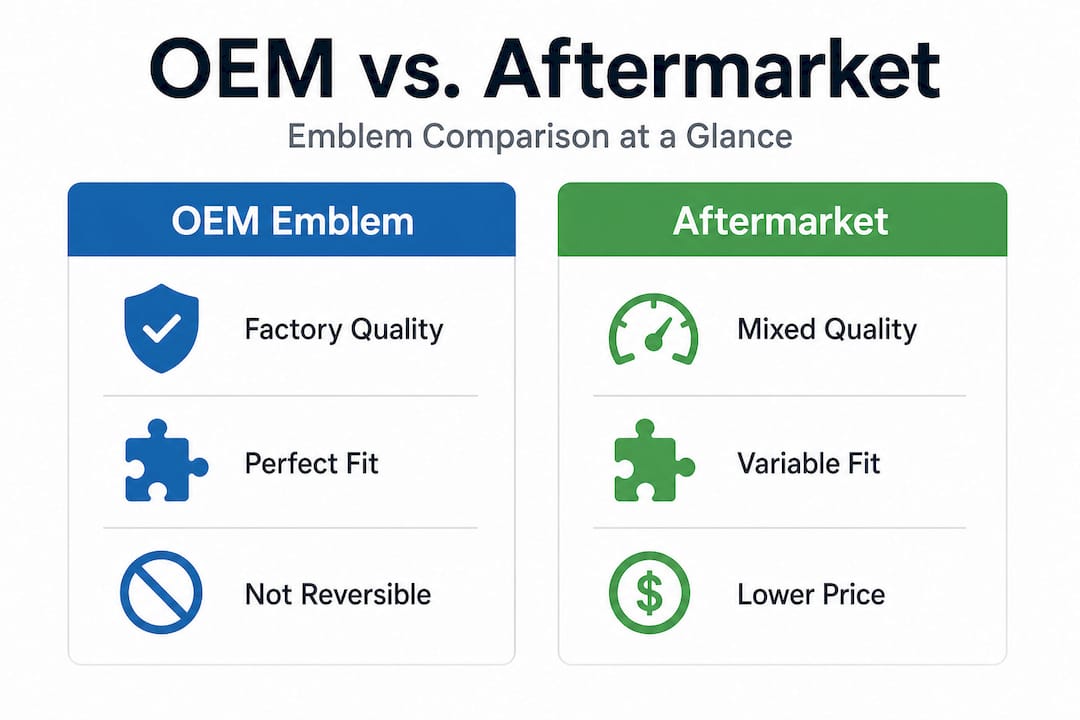
Aftermarket emblems are third-party replacements that try to replicate OEM badges at a lower price. Some are decent quality, but the fit is often slightly off, the chrome finish can oxidize faster, and the adhesive may not hold as well in extreme climates. For a daily driver, that might be fine. For a show car or a vehicle you're actively building, aftermarket usually falls short.
Overlay emblems are an entirely different beast. Rather than replacing the badge, they sit right on top of it. They're made from vinyl or resin, and the installation is far more approachable for the average enthusiast. Check out this practical overlay guide to understand how the process works from start to finish.
Key advantages of overlays include:
- No permanent modification to the original badge or vehicle panel
- Hundreds of design options, from matte black to holographic to state flag designs
- Easy swap if you want to change your look seasonally or before selling the vehicle
- Lower cost than sourcing and swapping a full replacement badge
One critical point that often gets glossed over: emblems are typically held by adhesive, studs, or both, and the removal method matters if you want to avoid damaging your paint or panel finish. This is a key reason why overlays are gaining ground among Subaru and Ford enthusiasts — you skip the removal process entirely. Understanding the overlay installation process before you start will save you a lot of frustration.
Pro Tip: Before ordering any overlay, take a photo of your emblem next to a ruler. Overlay sizing varies by trim level and model year, and a close measurement will ensure the overlay sits perfectly without hanging over the edges.
How OEM emblems are attached and removed
This is where a lot of enthusiasts make costly mistakes. Knowing exactly how your Subaru or Ford badge is mounted changes everything about how you should approach customization, whether you're applying an overlay or doing a full badge delete.
OEM emblems are fixed to the vehicle using one of three primary methods:
- Adhesive only: A double-sided tape or industrial bonding agent holds the badge flush against the panel. Common on trunk lids and tailgates.
- Studs only: Metal prongs extend through the panel and are secured with clips or nuts from the inside. Common on grille badges.
- Adhesive and studs combined: The most secure mounting, often used on flagship badges or logos that face harsh aerodynamic conditions at highway speeds.
Why does this matter? Because if you try to remove an adhesive-only badge incorrectly, you'll peel the clear coat. If you yank a stud-mounted badge without releasing the clips inside, you'll crack the surrounding panel or leave mounting holes. The removal method matters to avoid damaging the finish, and that's especially true for older Subaru and Ford models where the paint may already be slightly brittle.
Here's the good news for overlay fans: you don't have to touch any of this. Overlays go right on top of the existing badge. No heat guns, no dental floss removal techniques, no panel popping. Proper surface preparation is still required, though. Make sure you understand emblem cleaning for overlays before you start — contamination is the number one cause of early lifting.
Skipping the cleaning step is the most common mistake new overlay installers make. A quick wipe-down with isopropyl alcohol before installation adds months to your overlay's lifespan.
The cleaning process is simple but essential. Remove grease, wax, and old cleaning product residue from the badge surface before applying the overlay. This gives the adhesive a clean, solid bond from day one and helps protect your vehicle's finish over the long term.
Pro Tip: Warm the emblem surface slightly with a hairdryer before overlay application, especially in cold-weather states. Vinyl conforms better when both the overlay and the badge are at or above 60°F.
Popular OEM emblem overlay options for Subaru and Ford
Now for the fun part. Once you understand the mechanics, the creative options open up fast. The overlay scene for Subaru and Ford vehicles has exploded in variety over the last several years, and the options go well beyond basic matte black.
| Overlay Style | Material | Best For | Durability |
|---|---|---|---|
| Blacked out | Vinyl | Sleek, aggressive builds | 3 to 5 years |
| Color matched | Vinyl | Cohesive custom builds | 3 to 5 years |
| Holographic | Specialty vinyl | Show cars, standout builds | 2 to 3 years |
| State flag | Vinyl | Regional pride, personalized flair | 3 to 5 years |
| Gel/resin | Resin dome | 3D effect, premium look | 4 to 6 years |
Blacked-out overlays remain the most popular choice, especially on WRX and STI builds and Ford F-150 trucks with sport packages. They give the vehicle a clean, aggressive look that complements lowered suspensions and aftermarket wheels.
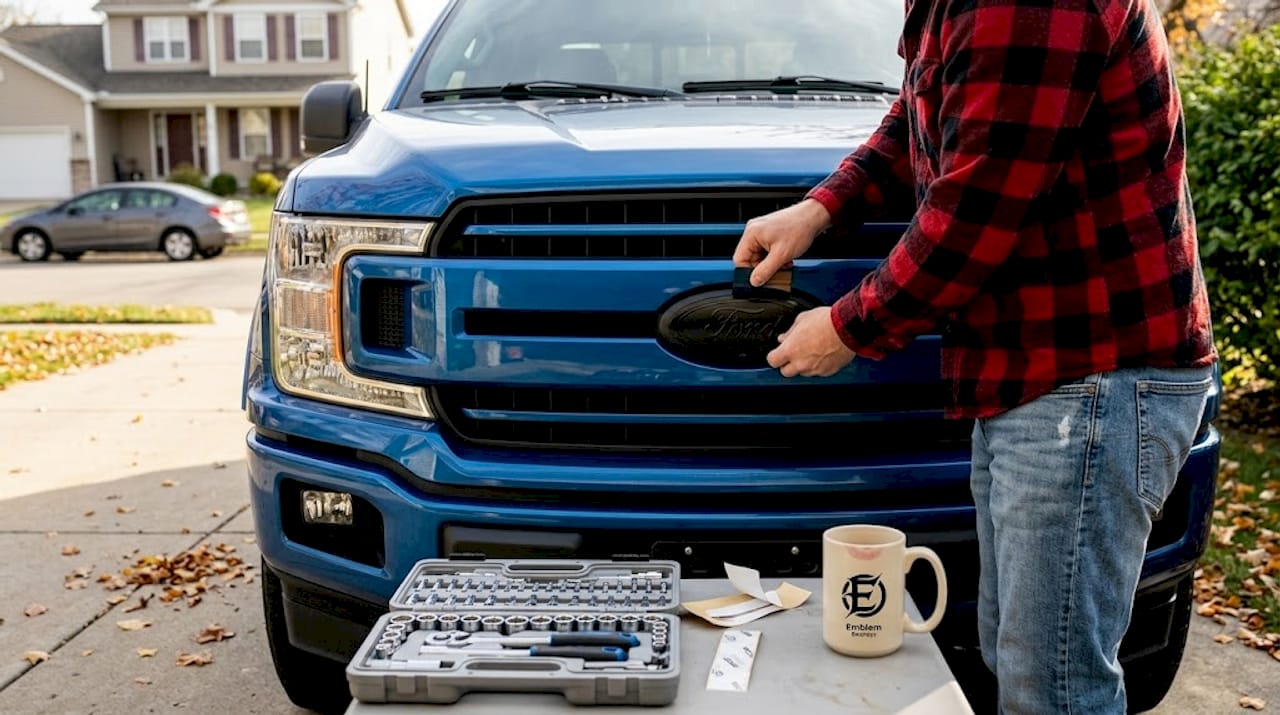
Color-matched overlays are a more refined choice. If you're building a show car or simply want the cleanest possible look, having your emblem overlay match your exterior color is a detail that judges and onlookers notice immediately.
State flag overlays deserve a special callout. They're one of the most creative ways to personalize a vehicle because the design is meaningful. Representing your home state on a Subaru Outback or a Ford Bronco is a statement that goes beyond aesthetics.
Common placement locations include:
- Front grille (primary badge)
- Rear trunk or tailgate badge
- Steering wheel center cap
- Wheel center caps
For specific design inspiration, check out custom Ford badge examples or browse ideas on personalizing Subaru and Ford emblems to see what other owners are doing with their builds.
The best part about all of these options? Every single one is reversible. If you want to go back to stock before trading in or selling, the overlay comes off cleanly without touching the OEM badge underneath.
Maintaining and caring for your emblems
Getting the overlay on is step one. Keeping it looking sharp is the long game. Both OEM emblems and overlays require basic maintenance that most owners overlook until something starts looking rough.
Follow these care practices to get the most out of your emblems:
- Wash gently: Use mild soap and water on the emblem surface. High-pressure washing directly at the emblem edge can work moisture under overlay edges over time.
- Avoid harsh chemicals: Degreasers and wheel cleaners that splash onto the badge can degrade vinyl overlays and attack the chrome finish on OEM emblems.
- Check edges regularly: Look for any lifting at the corners or edges of your overlay, especially after winter. Cold cycling causes vinyl to contract slightly.
- Wax around, not on: Apply wax or paint sealant to the panel around your emblems, but avoid getting wax buildup on the overlay itself. Wax residue in the recesses looks messy and is hard to remove.
- Replace when needed: If your overlay starts to fade noticeably or the adhesion is failing, swap it out. The OEM badge underneath is still in perfect shape.
For deeper guidance, the overlay maintenance guidance resource covers seasonal care, touch-up techniques, and how to safely remove an aging overlay without leaving residue on the factory badge.
Pro Tip: After any hand-wash, dry your emblems with a microfiber cloth rather than letting them air-dry. Water spots inside the recessed areas of an emblem can leave mineral deposits that dull the finish over time.
What most guides miss about OEM badges and overlays
Here's the honest take that most customization articles skip over entirely. The conversation around OEM badges and overlays usually stays at the surface level: "choose the right size, clean the surface, press and hold." That's useful, but it misses the bigger picture.
The real advantage of overlays is not just aesthetics — it's flexibility without consequence. Most vehicle modifications are a one-way door. Lift kits, aftermarket bumpers, paint changes: they affect value, insurance, and restoration difficulty. Overlays are genuinely different. They are the rare customization that costs almost nothing to reverse. For someone who wants to personalize their Subaru or Ford without any impact on resale, that's a significant financial advantage most people haven't thought through.
The biggest actual risk in the entire emblem customization process is not the overlay itself. It's what happens if you ever decide to remove the OEM badge underneath. As the emblem removal method issue makes clear, doing this wrong can scar your paint or leave stud holes that require body filler to fix. The irony is that owners who skip overlays in favor of full badge deletes often cause more permanent damage than they intended. Overlays sidestep that entire problem.
The other overlooked point is brand identity. Your Subaru stars or Ford oval carries equity. It's recognizable, trusted, and part of what makes your vehicle look like a finished product rather than a project. Covering it up entirely can actually diminish the appearance of the vehicle. The smartest move is to transform the emblem, not erase it. Dive into emblem identity insights to see how that philosophy plays out across different builds.
High-quality overlays paired with your OEM badge give you the best of both worlds: personalized style now, and the option to restore stock appearance later. That is a combination worth taking seriously.
Next steps: Transform your Subaru or Ford with custom overlays
Armed with a clear understanding of OEM emblems and overlays, you're ready to take action on your build.
At EmblemInlays.com, we make vinyl emblem overlays specifically designed for Subaru and Ford factory badges. Our catalog includes hundreds of designs — from blacked-out and color-matched options to all 50 state flags — so you can find a style that actually represents you. Every overlay is made to fit your OEM emblem precisely, so installation is clean and the result looks intentional, not improvised. Browse our full selection at embleminlays.com and find the overlay that matches your vision. No permanent mods. No risk to your resale value. Just a sharper-looking ride.
Frequently asked questions
Are OEM emblems better than aftermarket badges?
OEM emblems are engineered for exact fit and use top-grade materials matched to your specific vehicle, while aftermarket badges vary widely in quality, finish durability, and dimensional accuracy.
Will removing an OEM emblem damage my car?
Removing emblems can leave adhesive residue or expose mounting holes if you're not careful — using the right tools and technique is essential to protect your paint and panel finish.
How do overlay emblems attach to the original badge?
Overlay emblems use a pressure-sensitive adhesive backing that bonds directly to the surface of your existing OEM emblem, requiring no drilling, no removal, and no permanent changes to the vehicle.
What's the best way to clean emblems before applying overlays?
Wipe the emblem thoroughly with isopropyl alcohol to remove wax, grease, and residue, then let it dry completely before pressing the overlay into place for maximum adhesion strength.
Can I remove overlay emblems without affecting my car's resale value?
Yes. Overlays are designed to peel off cleanly without affecting the OEM badge underneath, leaving your factory emblem intact and your vehicle's resale presentation unchanged.