
TL;DR:
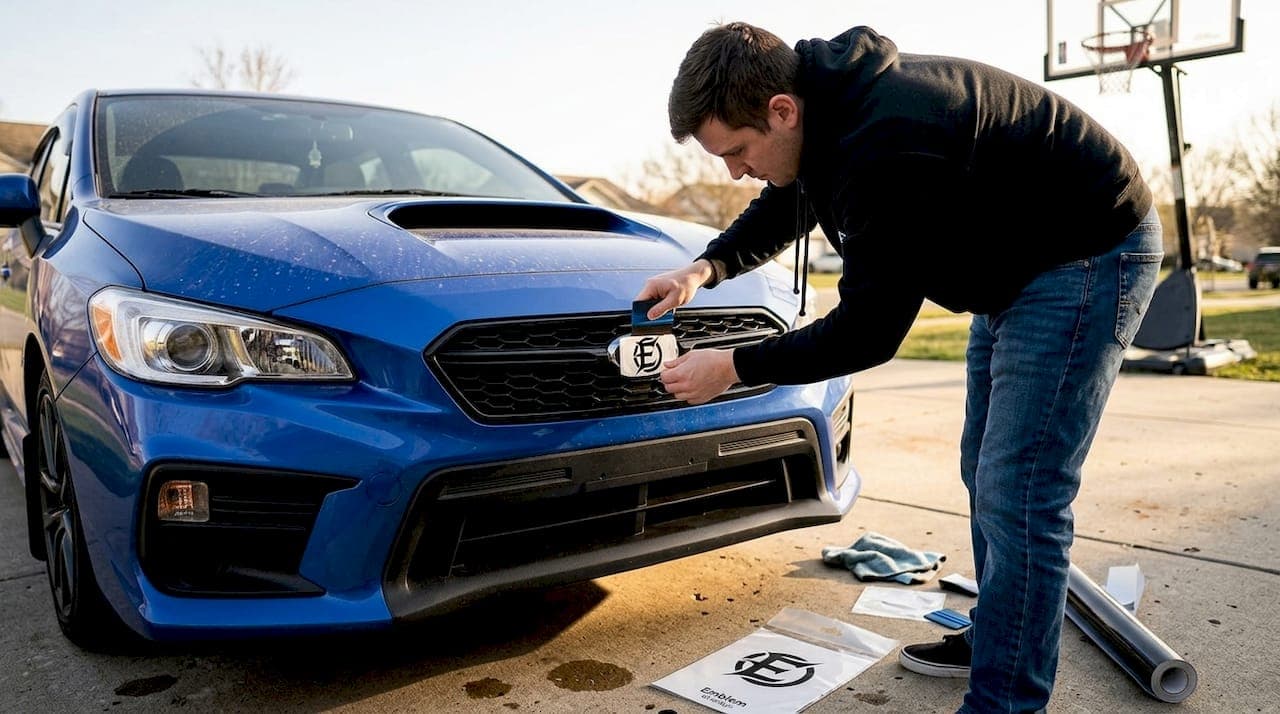
- Custom car badges have shifted from a symbol of brand loyalty to a means of personal expression. Vinyl overlays are the most affordable, reversible, and customizable option for enthusiasts to showcase their identity. The trend is especially strong among Subaru and Ford owners, emphasizing community, milestones, and individuality.
Car badges used to mean one thing: brand loyalty. You drove a Subaru, you wore the star cluster. You drove a Ford, you wore the blue oval. End of story. But something shifted. Subaru and Ford owners started treating those factory emblems as blank canvases, layering on vinyl overlays that reflect who they actually are, not just what they drive. Custom badge personalization has moved from a niche mod to a full-blown movement, and if you haven't explored it yet, you're missing one of the most affordable ways to make your ride genuinely yours.
Table of Contents
- The rise of custom car badges: What's driving the trend?
- How vinyl overlays and DIY kits changed the game
- Expressing identity: Why Subaru and Ford owners lead the way
- Avoiding common mistakes in custom badge projects
- What most car owners miss about custom badges
- Take your badge customization to the next level
- Frequently asked questions
Key Takeaways
| Point | Details |
|---|---|
| Personalization drives the trend | Enthusiasts value custom badges for expressing identity over displaying brand status. |
| DIY kits make it easy | Vinyl overlays and DIY badge kits let anyone update their emblem quickly and affordably. |
| Subaru and Ford lead | Owners of these brands are at the forefront of the badge customization movement. |
| Avoid common mistakes | Proper prep and quality materials are key to great-looking, lasting badge mods. |
The rise of custom car badges: What's driving the trend?
The numbers don't lie. The car badge market is valued at $500 million in 2025 and is growing at a 7% compound annual growth rate through 2033, fueled largely by personalization demand and the rise of aftermarket and DIY customization kits. That's not a niche hobby number. That's a mainstream market signal.
What's powering that growth isn't people replacing broken badges. It's people who want their car to say something specific about them. The custom Subaru and Ford badge trends emerging in 2026 show that enthusiasts are moving away from factory-standard looks at an accelerating pace. The motivation isn't prestige. It's personality.
Here's what the data tells us about why people customize:
- Community identity: Showing membership in a club, a regional group, or an enthusiast subculture
- Aesthetic control: Matching badge colors to a custom paint job or interior theme
- Personal milestones: Celebrating achievements, home states, or life events through design
- Subtle rebellion: Rejecting the idea that your car should look exactly like every other model off the lot
"Enthusiasts value custom badges for personal statement over status." This shift is so significant that 76% of drivers now reject paying luxury badge premiums for prestige alone, preferring what researchers call "smart luxury" — meaning value-driven, meaningful choices.
Even OEMs are paying attention. Subaru launched an official badge customization program, which signals that the factory itself recognizes the demand. Some enthusiasts call it "cheesy" when the manufacturer tries to bottle what started as grassroots creativity. But the fact that it exists at all proves the trend has gone mainstream. The importance of automotive personalization has never been higher, and the badge is the most visible, affordable place to start.
| Badge type | Average cost | Customization level | Reversibility |
|---|---|---|---|
| OEM factory badge | $30 to $80 | None | N/A |
| OEM official program | $50 to $150 | Limited | Low |
| Aftermarket vinyl overlay | $15 to $45 | Very high | Easy |
| Full badge replacement | $60 to $200+ | Moderate | Difficult |
The table makes it obvious why vinyl overlays are winning. They offer the highest customization at the lowest cost, and you can swap them out whenever you want a new look.
How vinyl overlays and DIY kits changed the game
Before vinyl overlays became widely available, customizing your badge meant either paying a shop to paint it or buying an expensive aftermarket replacement. Neither option was accessible for most enthusiasts. Vinyl overlays changed that equation completely.
A vinyl overlay is a precision-cut sticker designed to fit directly over your factory emblem. The best ones are made from automotive-grade vinyl with UV-resistant coatings that handle sun, rain, car washes, and road debris without fading or peeling. The overlay options for Subaru and Ford have expanded dramatically, with hundreds of designs now available including state flags, patterns, and custom color schemes.
Here's a direct comparison of your two main options:
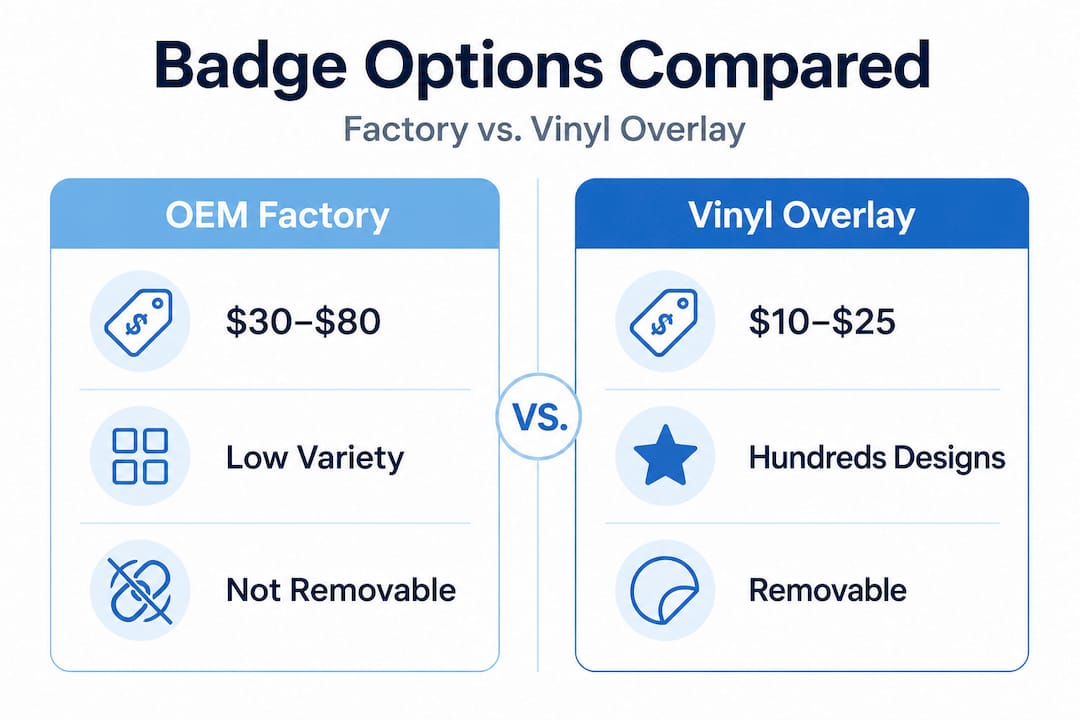
| Feature | OEM badge | Vinyl overlay |
|---|---|---|
| Cost | High | Low |
| Design variety | Minimal | Hundreds of options |
| Installation | Professional required | DIY-friendly |
| Reversibility | Permanent | Removable |
| Time to install | Hours | 15 to 30 minutes |
| Risk of damage | High | Very low |
The DIY badge market growth is a major driver behind the overall car badge market expansion, and it's easy to see why. When you can customize your badge yourself in under 30 minutes for under $40, the barrier to entry essentially disappears.
Here's how the installation process typically works for a vinyl overlay:
- Clean the badge thoroughly. Use isopropyl alcohol to remove all wax, grease, and dirt. Any residue under the overlay will cause bubbles or early peeling.
- Dry completely. Let the badge air dry or use a lint-free cloth. Moisture is the enemy of adhesion.
- Align the overlay before committing. Hold the overlay over the badge without removing the backing. Check all edges and angles.
- Apply from one edge. Peel the backing slowly from one side, pressing the overlay down as you go to avoid air bubbles.
- Use a squeegee or credit card. Smooth out any bubbles by pressing firmly from the center outward.
- Let it cure. Avoid washing the car for 24 to 48 hours after application to let the adhesive fully bond.
Check out the full DIY Ford badge customization workflow for a deeper breakdown of each step with photos and model-specific tips.
Pro Tip: Always choose vinyl rated for outdoor automotive use with at least a 5-year durability rating. Budget vinyl may look great on day one but will start lifting at the edges within a few months, especially in high-UV regions or climates with extreme temperature swings.
Expressing identity: Why Subaru and Ford owners lead the way
Not every car community embraces badge customization equally. Subaru and Ford owners are consistently at the front of this movement, and it's not a coincidence. Both brands have built cultures that go far beyond the vehicle itself.
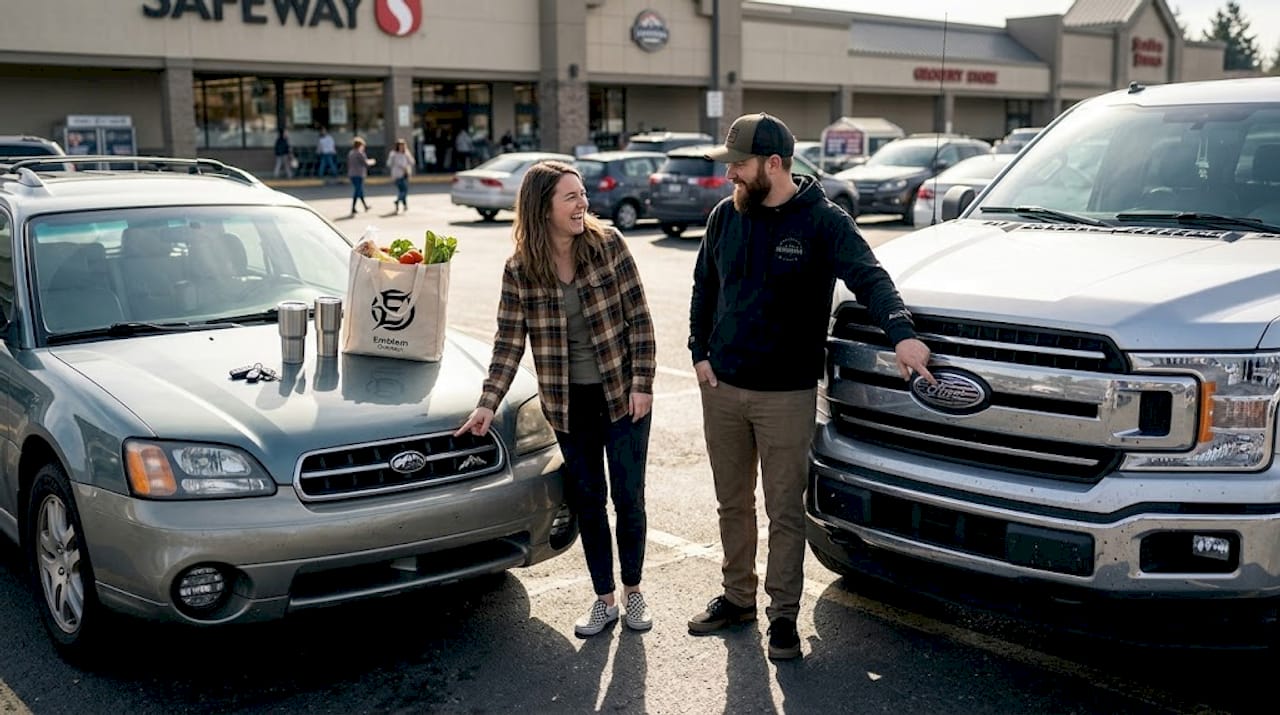
Subaru owners are famously community-driven. There are Subaru-specific camping meetups, trail groups, and regional clubs across the country. The car is often a symbol of a lifestyle, not just transportation. Ford enthusiasts, particularly in the F-150 and Mustang communities, share a similar tribal energy. Owning a Ford often means belonging to something bigger, and the badge is the most visible signal of that belonging.
The car emblems as identity concept runs deep in both communities. Here's what enthusiasts are actually expressing through their custom badges:
- State pride: A Texas flag overlay on a Ford F-150 or a Colorado overlay on a Subaru Outback tells a story instantly
- Club affiliation: Custom designs that match club colors or logos create instant recognition at meetups
- Personal achievements: Military service, sports teams, causes, and hobbies all translate into badge designs
- Color coordination: Matching the badge overlay to a custom wrap or paint job creates a cohesive, professional look
- Subtle humor: Some enthusiasts go for designs that only other fans will recognize, creating an inside-joke effect
The 76% of drivers who reject paying for status badges aren't anti-customization. They're pro-meaning. They want their car to reflect something real, not just signal how much they spent. That's exactly why vinyl overlays resonate so strongly in these communities.
Worth noting: if you're thinking about selling a modified car down the road, vinyl overlays are easy to remove, which means you can restore the factory look without any damage or residue. That's a major advantage over painted or replaced badges.
You can see exactly how this plays out in real builds by browsing examples of Ford custom badge mods, where enthusiasts have matched overlays to everything from matte black wraps to candy-paint finishes.
Pro Tip: If you want your badge to stand out at shows, go for a design with high contrast against your car's color. If you prefer a sleek, subtle look that only sharp eyes will catch, choose a tone-on-tone overlay that matches your paint closely. Both approaches work. The choice depends on whether you want to start conversations or just know it's there.
Avoiding common mistakes in custom badge projects
Getting excited and rushing the process is the fastest way to ruin a good overlay. Most failed badge customizations come down to a handful of avoidable mistakes. Knowing them ahead of time saves you money and frustration.
The most common errors enthusiasts make:
- Skipping surface prep. This is the number one cause of peeling overlays. Wax, polish residue, and even fingerprints prevent proper adhesion. Clean the badge like you're preparing it for paint.
- Buying cheap vinyl. Not all vinyl is equal. Low-grade materials fade, crack, and lift quickly. Automotive-grade vinyl with UV protection is worth the extra few dollars.
- Mismatching colors. Pulling a color from memory instead of matching it to your actual car in daylight leads to overlays that look off. Always compare in natural light.
- Rushing the alignment. Once automotive adhesive contacts the surface, repositioning is difficult. Take your time with alignment before committing.
- Ignoring temperature. Applying vinyl in cold weather (below 50°F) or in direct hot sun makes the material less pliable and the adhesive less effective. Work in a shaded area at room temperature.
Here's the proper prep sequence before any overlay goes on:
- Wash the car and rinse the badge area thoroughly
- Apply isopropyl alcohol (70% or higher) with a microfiber cloth
- Let the surface dry completely, at least 10 minutes
- Inspect under good lighting for any remaining residue or raised edges on the badge
- Warm the badge slightly with a heat gun on low if working in cooler conditions
The history of emblem customization shows that the tools and materials have improved dramatically over the past decade. Early DIY badge mods often used generic craft vinyl that failed within a season. Today's automotive-specific overlays are engineered to last years under real driving conditions.
The aftermarket badge kit market is growing precisely because manufacturers have raised the quality bar. When the product works reliably, word spreads fast in enthusiast communities. A successful overlay that holds up through two winters and a summer of car washes becomes a recommendation to every friend in the club.
Pro Tip: After installation, run your fingernail gently along every edge of the overlay. Any spot that doesn't feel fully bonded should be lifted carefully and reapplied with a small amount of heat. Catching a loose edge early prevents it from becoming a full peel later.
What most car owners miss about custom badges
Here's the take that most badge articles skip: custom badges aren't really about aesthetics. They're about authorship.
When you put a state flag overlay on your Subaru or a custom design on your Ford, you're not just changing how the car looks. You're inserting yourself into the car's story. That's a fundamentally different relationship with a vehicle than most people have. Most drivers are passengers in someone else's design decisions. Custom badge owners are authors.
The mass-produced badge on your factory vehicle was designed by committee, approved by a brand team, and applied to tens of thousands of identical vehicles. There's nothing wrong with it. But it says nothing about you. A custom letter alternative or a vinyl overlay with a design you chose specifically, maybe your home state, your club's colors, or a pattern that matches your wrap, carries a story that no factory badge can replicate.
The contrarian view worth considering: some enthusiasts argue that over-customizing dilutes the original brand identity they love. That's a fair point. But vinyl overlays answer that objection perfectly. They sit over the factory badge without destroying it. You can remove them. The original is always underneath, intact. You're not erasing the brand. You're adding a layer of yourself on top of it.
The deeper value is community. When another Subaru owner at a trailhead sees your state flag overlay and it matches their home state, that's an instant connection. When a Ford club member recognizes a design that signals shared history, the badge becomes a conversation starter that no factory emblem ever could be. These small moments of recognition are what build the subcultures that make car ownership genuinely meaningful.
Don't treat your badge as an afterthought. It's the first thing people see, and with the right overlay, it's the first thing that tells your story.
Take your badge customization to the next level
You've got the knowledge. Now it's time to actually do something with it. Whether you drive a Subaru Outback, a Ford F-150, or anything in between, there's a design that fits your vehicle and tells your story better than the factory badge ever could.
At Emblem Inlays, we make precision-cut vinyl custom emblem overlays designed specifically for Subaru and Ford factory badges. We carry hundreds of designs including all 50 state flags, so whether you're repping Texas on your F-150 or Colorado on your Crosstrek, we've got you covered. Our overlays use automotive-grade vinyl that holds up through car washes, UV exposure, and real driving conditions. If you want to see what's possible before you decide, browse our handmade emblem overlay ideas for inspiration and find the design that fits your build.
Frequently asked questions
Why are vinyl overlays so popular for customizing car badges?
Vinyl overlays are affordable, easy to apply, and let enthusiasts create a fully custom look without replacing the entire badge. The DIY kit market has grown significantly because quality has improved while prices have stayed accessible.
Is customizing badges common among Subaru and Ford owners?
Yes. These communities are especially active in badge customization because both brands carry strong subculture identities. Enthusiasts use overlays to signal personal statement over status and connect with like-minded owners at meetups and online.
Do custom badges affect a car's resale value?
Vinyl overlays are removable, so they rarely hurt resale value. They can actually attract buyers who share the same enthusiast identity, though removing them before a general sale is usually the safest move.
What materials are best for durable car badge customizations?
Automotive-grade vinyl with UV-resistant coating and a pressure-sensitive adhesive rated for outdoor use gives you the best combination of durability, color retention, and clean removal when you're ready for a change.