
TL;DR:
- Car color influences perception, emotional connection, and resale value.
- Rare hues like yellow and orange typically retain value better due to scarcity.
- Practical considerations include maintenance, visibility, and matching color to lifestyle and goals.
The color you choose for your Subaru or Ford isn't just a visual decision. It shapes how people perceive your car, how you feel every time you slide into the driver's seat, and yes, even what it's worth when you eventually sell it. Yellow cars depreciate only about 24% over three years, making rare hues a surprisingly smart financial move. Whether you're building a head-turning WRX or a Mustang that commands respect at every stoplight, understanding color psychology, market trends, and practical maintenance realities will help you make a choice you won't second-guess.
Table of Contents
- Understanding the psychology of color in car customization
- Market trends and resale value: Why color matters for Subaru and Ford owners
- Practical impacts: Maintenance, visibility, and long-term satisfaction
- Personalizing with purpose: How to choose the right color for your vision
- Our take: Why color is the ultimate expression in car customization
- Bring your vision to life: Colorful overlays and custom accents
- Frequently asked questions
Key Takeaways
| Point | Details |
|---|---|
| Color impacts resale value | Rare car colors like yellow often keep their value much better than common shades. |
| Trends favor unique hues | Nature-inspired and bold tones are increasingly popular in Subaru and Ford communities. |
| Maintenance differs by color | Colors like black and white require different care and show wear differently. |
| Personalization reflects identity | Choosing the right color scheme is a chance to express your personality and style. |
| Experiment with overlays | Using emblem overlays lets you safely try out new colors without permanent commitment. |
Understanding the psychology of color in car customization
Color is one of the most immediate signals your car sends to the world. Before anyone hears the exhaust note or sees the badge, they see the color. That first impression carries real psychological weight, and for Subaru and Ford enthusiasts, it's a chance to say something specific about who you are.
Different colors trigger different emotional responses. Red communicates speed, aggression, and passion. It's no accident that performance cars have leaned on red for decades. Blue signals calm confidence and reliability, which is why it resonates so strongly in the Subaru community where drivers value trust and adventure in equal measure. Green, especially the earthy, muted greens gaining popularity right now, suggests balance and a connection to nature. Yellow and orange project optimism and energy, making them natural fits for Ford's performance lineup. Black reads as powerful and premium. White feels clean and precise. Gray sits in the middle: understated, professional, and broadly appealing.
Here's a quick breakdown of what common car colors tend to communicate:
- Red: Speed, excitement, confidence
- Blue: Calm, trustworthy, adventurous
- Green: Nature-connected, balanced, distinctive
- Yellow: Optimistic, bold, attention-grabbing
- Orange: Energetic, enthusiastic, sporty
- Black: Powerful, premium, sleek
- White: Clean, minimal, precise
- Gray: Neutral, sophisticated, versatile
The Subaru community has long gravitated toward colors that feel grounded and outdoorsy, while Ford performance fans often go for colors that pop at car meets and track days. Both approaches are valid, but they reflect genuinely different identities. The way car emblems express your style works the same way: every detail adds up to a statement.
Cultural trends are pushing things in a new direction right now. Nature-inspired hues like forest green, sage, and warm brown are showing up more frequently, driven by a broader cultural shift toward authenticity and environmental awareness.
"Color is one of the most powerful tools for personal branding. People form emotional bonds with their vehicles, and color is often the first layer of that connection." — Car History BG
Bold colors boost enthusiast appeal but can narrow your buyer pool when it's time to sell. Neutrals are safer for resale but less exciting to own. And practically speaking, black shows swirls and dirt more readily, while white hides scratches but makes grime visible under certain lighting. These aren't small details when you're living with the car every day.
Market trends and resale value: Why color matters for Subaru and Ford owners
Understanding what colors mean emotionally is one thing, but let's look at how these choices play out in today's marketplace.
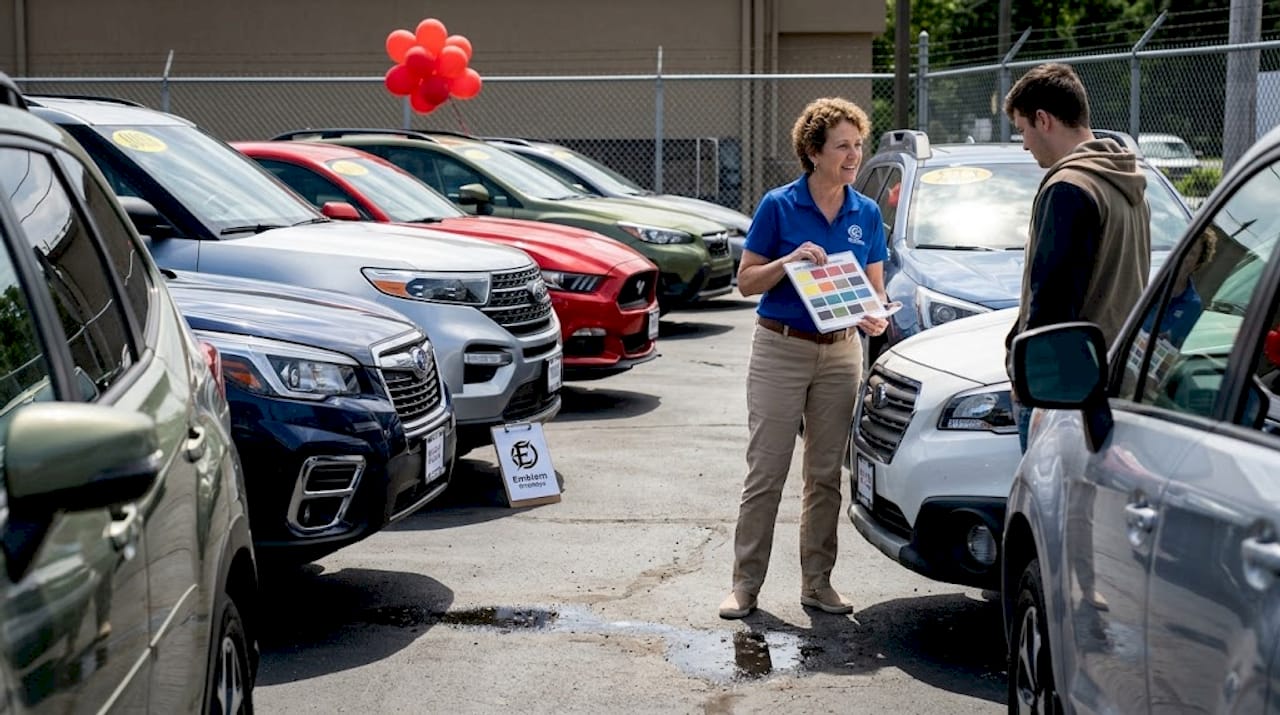
The data on color and depreciation is more interesting than most people expect. Yellow, orange, and green cars hold their value better than the crowd favorites. That seems counterintuitive until you realize scarcity drives demand. When only a small percentage of vehicles on the road come in a specific color, buyers who want that look have fewer options, which keeps prices stronger.
| Color | Approx. 3-year depreciation |
|---|---|
| Yellow | ~24% |
| Orange | ~26% |
| Green | ~27% |
| White | ~34% |
| Black | ~36% |
Yellow cars depreciate least, with white and black showing the highest depreciation rates despite being the most popular choices. Rare hues retain value precisely because they're uncommon.
For Subaru owners, earth tones like olive, warm gray, and deep blue are gaining traction. They feel premium without being flashy, and they photograph beautifully on trail shots and mountain roads. Ford enthusiasts, especially those in the Mustang and F-150 Raptor communities, are leaning into performance yellows and competition oranges that look aggressive at car shows and on track days. Check out these Ford customization tips if you want to see how color integrates with the full build.
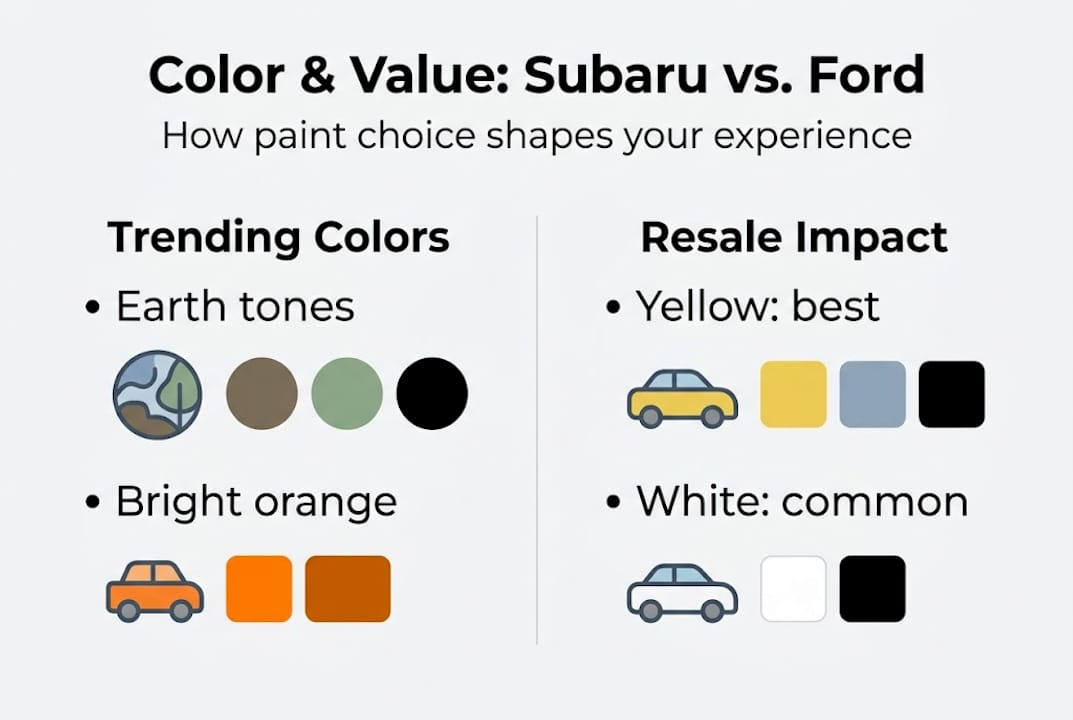
Here's the stat that should reshape how you think about the market: roughly 80% of cars sold today are still white, black, gray, or silver. That means bold colors are genuinely rare on the road, which is exactly why they turn heads and hold value. The trend toward vibrant tones like greens, violets, and oranges is accelerating, but the market hasn't caught up yet. You're still early if you go bold.
For customizers tracking custom emblem trends in 2026, the takeaway is clear: bold colors reward enthusiasts who plan to keep their vehicles long-term or sell to a targeted audience. If you need broad market appeal, neutrals still win. But if you're building for yourself and a community that appreciates the effort, rare colors are a legitimate advantage.
Practical impacts: Maintenance, visibility, and long-term satisfaction
Beyond trends and value, it's crucial to look at daily life: how easy your choice is to live with and enjoy.
The color you love at the dealership can become the color you dread maintaining if you don't think it through. Here's how the most popular options actually perform in real-world conditions:
- Black: Looks stunning when clean but shows swirls and dirt faster than any other color. Requires more frequent washing and careful detailing.
- White: Hides surface scratches well but makes grime and brake dust very visible. Lighting conditions dramatically change how clean it looks.
- Silver and gray: The most forgiving colors for daily driving. Dirt and minor scratches are far less visible.
- Red and orange: Show water spots and dust but are easier to detail than black. The vibrancy fades faster without UV protection.
- Green and blue: Mid-range maintenance. Darker shades behave more like black; lighter shades closer to white.
Visibility is another factor most customizers overlook. High-contrast colors like yellow and white are statistically easier to spot in low-light and poor-weather conditions. If you're commuting in the Pacific Northwest in your WRX or driving a Mustang through heavy rain, that visibility edge is real.
Pro Tip: Before committing to any color, look at paint swatches under direct sunlight, indoor fluorescent lighting, and at dusk. Colors shift dramatically across lighting conditions, and what looks perfect in the showroom can surprise you in your driveway at 7 a.m.
Coordinating your emblem overlays with your paint color is a smart move that most owners don't think about until after the fact. Subtle customization with overlays lets you tie accent colors together without committing to a full repaint. And when it comes to protecting your investment, exploring paint protection options early in the build process will save you money and frustration later.
Personalizing with purpose: How to choose the right color for your vision
With practical concerns and trends in mind, here's a proven process for choosing your ideal color scheme.
Most customizers jump straight to inspiration boards and skip the planning steps that prevent expensive regret. This process keeps you grounded without killing your creativity.
- Define your goal. Are you building for the show circuit, daily driving, track use, or resale? Each goal points toward different color strategies.
- Research your community. Look at what Subaru and Ford owners in your specific model community are doing. A WRX build and a Bronco build have very different color cultures.
- Test under real conditions. Get paint chips or vinyl samples and view them on your actual car in multiple lighting environments before deciding.
- Consider your lifestyle. If you park outdoors, skip black. If you live in a dusty area, avoid dark colors unless you love washing your car twice a week.
- Plan your accent colors. Your emblem overlays, trim accents, and interior touches should complement your base color, not fight it. Custom emblem overlays make it easy to test accent combinations before you commit.
- Factor in maintenance costs. Darker colors and specialty finishes require more upkeep. Budget for ceramic coating or paint protection film if you go that route.
Pro Tip: If you love a bold color but aren't ready to commit to a full respray, use accent overlays on your emblems and trim first. It's an affordable way to see how a color reads on your specific vehicle before going all in.
Here's a real example: a Mustang GT in Competition Orange reads as a track-ready machine that commands attention. A WRX in Wilderness Green feels purposeful and rugged. Both are bold choices, but they speak to completely different identities. Performance cars benefit from rare colors when it comes to premium resale, so bold choices on the right platform can actually pay off.
Our take: Why color is the ultimate expression in car customization
Stepping back from the specs and depreciation charts, color is really about belonging and communication. When you drive a Plasma Yellow WRX or a Grabber Blue Mustang, you're not just picking a finish. You're joining a conversation with every other enthusiast who recognizes what that color means.
Here's the thing most people won't say out loud: the enthusiasts who play it safe with silver and white almost always wish they'd been bolder at least once. Color is one of the few customization decisions that shapes how you feel about your car every single morning. That emotional return is real and it compounds over time.
The smartest approach isn't to chase resale value or copy what's trending. It's to choose a color that fits your actual life and then commit to it fully, right down to the emblem overlays and trim accents. Half-hearted builds look half-hearted. Personalization in 2026 is about intentionality, not just aesthetics. When every element of your build speaks the same language, the result is something that genuinely turns heads for the right reasons.
Bring your vision to life: Colorful overlays and custom accents
You've done the thinking. Now it's time to start building. The smartest first move for most Subaru and Ford owners isn't a full respray. It's testing your color direction with emblem overlays that can be swapped out without any commitment or damage to your factory finish.
Our emblem overlays are precision-cut vinyl pieces that fit directly over your factory Subaru or Ford emblem, giving you an instant color and style upgrade with zero risk. We carry hundreds of designs including every state flag, so you can represent your roots while customizing your ride. If you want to see how handmade emblem overlays can elevate your full build, start there. It's the most affordable way to experiment boldly and refine your vision before committing to bigger changes.
Frequently asked questions
What is the best color for retaining a car's value?
Yellow and rare colors depreciate the least, typically losing only about 24% after three years, because scarcity keeps demand strong among targeted buyers.
Are bold car colors a bad idea for daily drivers?
Bold colors increase enthusiast appeal but can shrink your buyer pool at resale time; neutral tones are safer if broad market appeal matters to you.
How do Subaru and Ford fans use color trends in customization?
Subaru enthusiasts tend to favor earth tones and nature-inspired colors, while Ford owners often reach for bright oranges and yellows, especially on performance models, reflecting trends shifting toward greens, violets, and oranges.
What's the practical difference between white and black cars?
Black shows swirls and dirt far more readily than white, while white can mask minor scratches but makes grime and brake dust highly visible under bright lighting.